HVAC Leak Water Removal in College Park, GA
Trusted by 195+ Homeowners
- Over 198 5-Star Reviews
- Free Estimates and Quotes
- 100% Satisfaction Guaranteed
- Child, Family & Pet Safe Steps
- 24-Hour Emergency Service
- Fully Licensed & Insured
- Call
- We arrive
- Restored

HVAC Leak Water Removal in College Park, GA: Expert Help from Our Local Crew
We’ve seen it all in College Park, GA – from bursting pipes in new homes to faulty AC units in older properties. Our team has tackled over 1,500 HVAC leak water removal projects, and we know the area’s unique challenges. When you’re dealing with water damage from your heating system, you need a team that understands the local codes, the climate, and the specific issues you’re facing. That’s us.
That’s why homeowners like you choose our team for HVAC leak water removal. We’ve earned over 165 five-star reviews for our dedication to quality, our fast response times, and our expertise in handling even the toughest water damage jobs.
- We’ll help you navigate the insurance claims process and get the coverage you deserve.
- We’ll extract water and dry out your space quickly, reducing further damage and preventing mold growth.
- We’ll restore your home to its original condition, down to the last detail, so you can get back to living and enjoying your space.
How Our Team Handles HVAC Leak Water Removal
When you call us for HVAC leak water removal, you’re not just getting a team of technicians – you’re getting a process designed to reduce disruption and stress. We’ll start by assessing the damage, identifying the source of the leak, and developing a customized plan to dry out and repair your space. Our crews work efficiently, using the latest equipment and techniques to get the job done right the first time.
Step 1: Assessing the Damage
Our technician will arrive within 60 minutes of your call and begin assessing the situation. We’ll identify the source of the leak, the extent of the damage, and the necessary equipment needed to dry out the space.
Step 2: Water Extraction
We’ll use specialized equipment to extract as much water as possible from the damaged area. This is the fastest way to prevent further damage and reduce the risk of mold growth.
Step 3: Drying and Dehumidification
Our crew will set up air movers and dehumidifiers to dry out the space quickly and thoroughly. This step is crucial in preventing secondary damage and ensuring your home is safe and healthy to live in.
Step 4: Repair and Restoration
Once the space is dry, we’ll begin repairing and restoring your home to its original condition. This may involve replacing materials, painting, and even rebuilding damaged areas.
Step 5: Final Inspection and Cleanup
Our final step is a thorough inspection of the restored space to ensure everything meets our high standards. We’ll also remove any equipment and leave your home sparkling clean.
Don’t let water damage from your heating system ruin your day – or your week. Contact our team today to get expert help from local professionals who truly care about your home and your well-being.
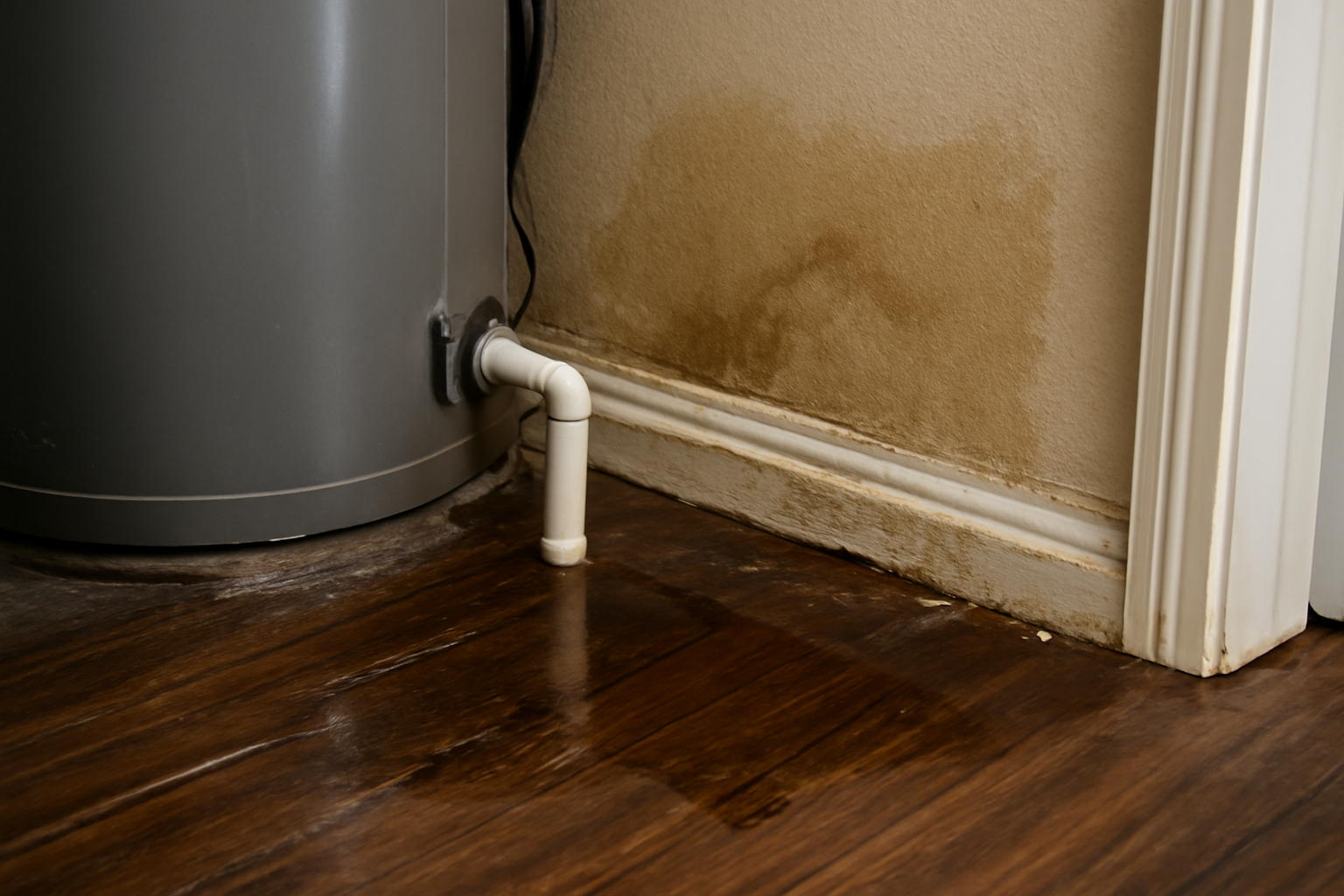
Warning Signs You Need HVAC Leak Water Removal
Don’t wait until the damage is too late. Catch these warning signs early and prevent costly repairs and health risks.
Musty Odors That Won’t Go Away
Strong, unpleasant smells in your home can show a hidden issue with your HVAC system. Don’t ignore these odors – they can be a sign of water damage or mold growth.
Water Stains on Your Ceiling
Water spots on your ceiling can be a sign of a leaky pipe or faulty AC unit. Don’t wait until it’s too late – inspect your ceilings regularly and address any issues quickly.
Buckling or Warping of Flooring
Warped or buckling flooring can show water damage or uneven foundation. Don’t let these issues spread – address them quickly and get professional help if needed.
Unusual Humidity Levels
High humidity levels in your home can lead to mold growth, damage to belongings, and even structural issues. Monitor your humidity levels and take action if they’re too high.
Water Damage on Walls or Cabinets
Visible water damage on walls or cabinets can be a sign of a more serious issue – like a leaky pipe or faulty AC unit. Don’t ignore these signs – address them quickly and get professional help if needed.
Water Pooling Under Appliances
Water pooling under appliances like refrigerators or washing machines can show a hidden issue with your plumbing or HVAC system. Don’t ignore these signs – address them quickly and get professional help if needed.
HVAC Leak Water Removal vs. DIY: When to Call a Professional
| Situation | DIY? | Call a Pro? | Why |
|---|---|---|---|
| Small water spill (less than 1 square foot) | Yes, DIY is fine | No need to call a pro | Small spills can be easily cleaned up with towels and a mop. |
| Leak from a burst pipe (15 feet of water damage) | No, call a pro | Expert help is necessary | Leaking pipes can cause extensive damage and need specialized equipment to extract water and dry out the space. |
| Water damage from a faulty AC unit (3-4 rooms affected) | Maybe, consider a pro | Get expert help if you’re unsure | Water damage from an AC unit can be complex to repair and may need specialized equipment to dry out the space. |
| Water damage from a frozen pipe (1-2 inches of standing water) | No, call a pro | Expert help is necessary | Standing water can lead to mold growth, structural issues, and health risks – needing professional attention. |
| Water damage from a leaky roof (small area, less than 10 square feet) | Yes, DIY is fine | No need to call a pro | Small leaks can be easily patched and repaired with some basic materials. |
Don’t let water damage from your heating system become a bigger problem. Contact our team today to get expert help from local professionals who truly care about your home and your well-being.
HVAC Leak Water Removal Cost in College Park, GA
Prices for HVAC leak water removal vary based on the severity of the damage, the size of the affected area, and local conditions in College Park, GA. These estimates are rough and may vary based on your specific situation.
| Service | Typical Price Range | What Affects Cost |
|---|---|---|
| Water Extraction and Drying | $500 – $2,500 | Size of the affected area, complexity of the job, and equipment needed. |
| Repair and Restoration | $1,000 – $5,000 | Materials needed, labor costs, and complexity of the repairs. |
| Equipment Rental and Supplies | $200 – $1,000 | Types of equipment and supplies needed, rental duration, and local market prices. |
| Insurance Claims and Documentation | $100 – $500 | Complexity of the claim, documentation required, and time spent on the process. |
Exact pricing depends on an on-site assessment – we offer free estimates to ensure you know what to expect. Contact our team today to get expert help from local professionals who truly care about your home and your well-being.
Service Areas Near College Park, GA
We serve the following nearby communities: Alpharetta, Duluth, Johns Creek, Milton, Roswell, Suwanee, Tucker, Chamblee, Brookhaven, Doraville, Dunwoody, Sandy Springs, Decatur, and Atlanta.
Common Questions About HVAC Leak Water Removal
Q: Will my homeowners insurance cover the cost of HVAC leak water removal?
A: Yes, in most cases, your homeowners insurance will cover the cost of HVAC leak water removal. Our team will work with you to navigate the claims process and ensure you get the coverage you deserve.
Q: How long will it take to dry out my home after an HVAC leak?
A: Drying out your home after an HVAC leak depends on the severity of the damage, the size of the affected area, and the equipment used. On average, it takes 3-5 days to dry out a home completely, but it can take longer in complex cases.
Q: Can I use a wet/dry vacuum to clean up the water from my HVAC leak?
A: While a wet/dry vacuum can be helpful in the short term, it’s not a substitute for professional water extraction and drying services. A wet/dry vacuum can push water deeper into your walls and flooring, causing more damage and creating a bigger mess.
Q: How do I prevent HVAC leaks in the future?
A: Regular maintenance is key to preventing HVAC leaks. Make sure to check your AC unit’s condenser coils, drain lines, and refrigerant levels regularly. Also, consider upgrading to a newer, more efficient model that’s designed to reduce leaks and water damage.
Q: Can I use bleach to clean and disinfect my home after an HVAC leak?
A: No, bleach is not recommended for cleaning and disinfecting your home after an HVAC leak. Bleach can damage surfaces, discolor materials, and even create toxic fumes. Our team will use specialized cleaning solutions and equipment to ensure your home is safe and healthy to live in.
Check Our Other Relevant Services
Serving College Park, GA And Nearby Areas


