East Point, GA · Fulton County
Basement Water Removal in East Point, GABasement Wall Drying & Emergency Basement Flooding
Basement Water Removal in East Point runs from basement water pump out and basement drying services to basement dehumidification.
Answered 24/7
Basement Water Removal Solutions for East Point Homeowners
In East Point, a finished basement or lower level takes more work after a flood. Carpet, pad, laminate, drywall and insulation all trap water against the concrete and framing.
Homes in East Point and nearby College Park, Forest Park and Riverdale with basements face storm seepage, sewer backups and plumbing leaks. Help with basement water removal covers pump-out, wall and floor drying and dehumidification.
The Basement Water Removal Process in East Point
Basement Wall Drying
Opening the bottom of finished walls lets air reach the studs and sill plate, which otherwise stay wet behind the drywall.
Emergency Basement Flooding
Emergency response starts with making power safe, stopping the source if possible and pumping out the water.
Basement Floor Water Damage
Flooring that buckled or swelled is removed. Tile and sealed concrete can often be cleaned and dried in place.
Sump Pump Failure Water Cleanup
Cleanup after a sump failure includes drying the area around the pit and noting whether the pump, switch or power was the cause.
Basement Moisture Inspection
An inspection shows how high water wicked up the walls and how far it spread under flooring, which sets the drying plan.
When to Call for Basement Water Removal in East Point
Standing Water in Basement
Standing water anywhere on the basement floor needs to be pumped out before it soaks the walls.
Warped or Buckling Flooring
Flooring that buckles, lifts or feels spongy has water trapped between it and the slab.
Soggy or Wet Carpeting
Carpet that feels damp or smells sour is holding water in the pad against the concrete.
Efflorescence on Concrete Walls
White, powdery deposits on concrete walls mean water is passing through the masonry.
How Basement Water Removal Works in East Point
Step 1: Source Control and Water Pump Out
The leak is shut off and standing water is pumped out, starting at the lowest point.
Step 2: Water Extraction
Extractors pull water from carpet, pad and concrete, and wet vacs clear corners and stairs.
Step 3: Dehumidification and Drying
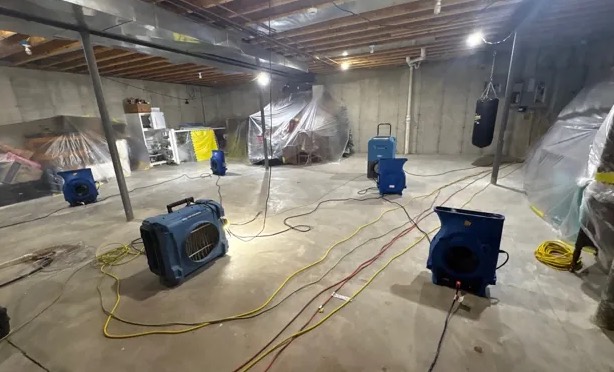
Large dehumidifiers and air movers dry walls, framing and slab over several days.
Step 4: Inspection and Clearance for Repair
Final readings confirm the basement is dry and ready for drywall and flooring repairs.
Sources of Basement Water Problems
Appliance Malfunctions and Overflows
Washers, utility sinks and water softeners in the basement can overflow or leak.
Improper Landscape Grading
Soil that slopes toward the house directs rainwater straight to the basement walls.
Sump Pump Malfunction or Power Loss
A sump pump that fails mechanically or loses power during a storm lets groundwater rise.
Heavy Rainfall and Storm Flooding
Heavy rain saturates the soil and pushes water through walls, cracks and the floor joint.
Professional Basement Water Removal for All Properties
Residential Basement Water Removal
Older homes with a basement may see seepage with every heavy storm. Water removal handles the current damage, and the entry point is noted for a waterproofing contractor.
Commercial Basement Water Removal
Multi-unit buildings with shared basements need each storage and laundry area pumped, dried and documented for the property manager.
Basement Water Removal vs. DIY: When to Call the Pros
Checking appliance hoses and extending downspouts away from the house are good DIY steps before storm season. Once the basement floods, call (770) 800-8286 for help.
What Influences the Price of Basement Water Removal
The pros look at water depth, water type and basement finishes before pricing basement water removal in East Point, then explain the scope.
Drying Time Required
Basements dry slowly, and each extra day of equipment adds to the total.
Access and Complexity
Narrow stairs, low ceilings and crowded storage areas make the work slower and longer.
Basement Square Footage
Larger basements need more extraction, more drying equipment and more days of drying.
Does Insurance Cover Basement Water Removal?
Coverage for basement water removal depends on the water source and your policy. The pros document the damage and drying, and your insurer decides what is covered.
The Value of Professional Basement Water Removal
Contamination Safety Protocols
Sewage and dirty water are handled with protective gear, containment and disinfection.
Detailed Damage Documentation
Photos, readings and drying logs are kept to support your insurance claim.
Methodical Water Removal Process
Water is removed in a set order: pump-out, extraction, removal of soaked materials, then drying.
24/7 Basement Water Removal When You Need It
If water is near outlets, the furnace or the electrical panel, stay out of it. Call (770) 800-8286 for help in East Point and wait for power to be made safe.
Call Now (770) 800-8286Local Basement Water Removal Coverage for College Park, Forest Park and Riverdale
Help with basement water removal reaches College Park, Forest Park and Riverdale, plus other communities around East Point, for finished and unfinished basements alike.
- Basement Water Removal in College Park
- Basement Water Removal in Forest Park
- Basement Water Removal in Riverdale
- Basement Water Removal in Union City
- Basement Water Removal in Morrow
- Basement Water Removal in Decatur
- Basement Water Removal in Fairburn
- Basement Water Removal in Brookhaven
- Emergency Damage Restoration in 30344
- Storm Damage Restoration in 30344
- Water Damage Restoration in 30344
- Water Extraction Service in 30344
- Water Leak Detection in 30344
- Water Removal Service in 30344
Answers to Top Basement Water Removal Queries
How is contaminated water handled in a basement?
With protective gear, containment, removal of porous materials and disinfection of hard surfaces before drying.
What is emergency basement flooding response?
Help any hour to make power safe, stop the source, pump out water and start drying before more damage sets in.
What should I do right after basement flooding?
Make power safe, avoid sewage, move belongings above the water, take photos and call for water removal.
What is the difference between a pump out and extraction?
A pump out removes deep standing water. Extraction pulls the remaining water from carpet, pad and floors.
What is involved in basement water removal?
Making power safe, pumping out standing water, extracting floors and carpet, removing soaked materials and dehumidifying until dry.